Discovering Beja: Unveiling the Treasures of Portugal's Medieval Town
 Discovering Castro Verde: Unveiling the Charms of a Traditional Portuguese Village
Exploring Beja: A Medieval Gem in Portugal
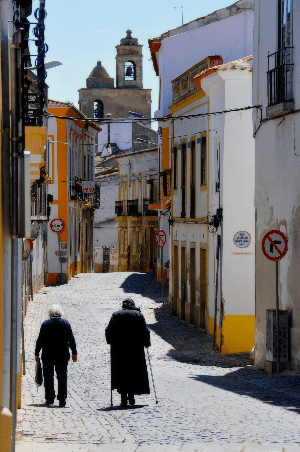
Beja, the main city of Baixo Alentejo, is a quiet and welcoming destination. With its beautiful walled center and charming sights within walking distance, it offers an ideal combination for a relaxing stay and an authentic Portuguese experience. Although not heavily visited by tourists, Beja has much to offer in terms of historical landmarks, delicious cuisine, and cultural attractions.
Castello di Beja
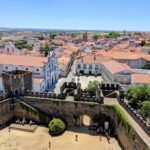
The Castello di Beja, a medieval fortification, is the city's most emblematic monument. Its towering Mastio, reaching almost 40 meters in height, is considered by some authors to be the tallest military tower in the country. Construction of the Gothic fortress began in the 13th century, shortly after the Christian conquest of the city, and extended throughout the 14th and possibly 15th centuries. Its late-Gothic and Manueline details can be appreciated up close in the tracery of the windows and the slender pointed merlons. From the top, visitors can enjoy panoramic views for kilometers in every direction, showcasing the castle's strategic position as a Portuguese stronghold against Spanish attacks from the east during the Moorish era.
Chiesa di Santiago Maior / Cattedrale di Beja
The Chiesa di Santiago Maior, also known as the Cattedrale di Beja, is a significant religious site in the city. Built in the 14th century, it was consecrated in 1590 and underwent subsequent improvements. Originally, there was a church dedicated to Santiago on the site, which served as the parish seat of Santiago. The medieval temple was demolished at the end of the 16th century to make way for the current church, which showcases Mannerist architecture. Over the centuries, the church has undergone various renovations to adapt to its current functions as a bishopric. Visitors can explore the church's interior, which was further enhanced in 2014/15.
 Exploring Castro Verde: Unveiling the Charms of Rural Portugal
Monumento ao Prisioneiro Político Desconhecido
The Monumento ao Prisioneiro Político Desconhecido holds a significant place in Beja's history. Jorge Vieira, the sculptor, donated this poignant public artwork to the city in 1994. The sculpture, conceived as a plea for freedom of thought, was selected for the International Sculpture Competition organized by the Institute of Contemporary Arts in London in 1953. It later graced the Pavilion of Portugal at the 1958 Brussels World's Fair. For almost two decades, it didn't have a permanent home until 1994, nearly two decades after the dismantling of the oppressive Estado Novo regime.
Parco Publico da Cidade
The Parco Publico da Cidade, a tranquil green space to the southeast of the historical center, has an interesting history. Originally part of the Convento di São Francisco in the medieval period, it served as a garden. In the 16th century, it transformed into a military training ground, which remained until the 19th century. With the city's growth in the 19th century, Beja's inhabitants desired a park. A lake was dug, exotic and native trees were planted, and gas lamps were installed along the avenues. The park features a charming iron pavilion from this period, as well as a playground for children.
Gogna di Beja
The Gogna di Beja, ordered by King D. Manuel I in 1521, served as a practical tool for public punishment. Located in the Praça da República, it had the monarch's emblems, such as the armillary sphere and the Cross of Christ, on top. While most of its elements disappeared over time, the capital, the final section, and part of the shaft survived. The structure was reconstructed in 1938 but underwent some modifications. It represented not only a means of punishment but also symbolized the monarch's authority.
 Exploring the Enchanting Town of Beja in Portugal's Allentasia Region
Logge Italiane di Beja
The Logge Italiane di Beja was initially intended to be a meat market, constructed in the main square of the city on the orders of Infante D. Luís, the Duke of Beja. Built in the 16th century, it followed the typology of Italian loggias influenced by the Italian Renaissance. The building was so magnificent that D. Luís deemed it unfit for its original purpose and offered it to the confraternity of Santa Casa da Misericórdia. In the 1940s, the building regained some of its original appearance.
Beja's rich history, along with its picturesque squares, excellent restaurants, and affordable accommodations, make it a delightful destination for those seeking an authentic Portuguese experience. The city's location in the heart of the Planície Dourada (Golden Plain) region, surrounded by expansive wheat fields, adds to its charm. Explore Beja's historical monuments, indulge in local culinary delights, and immerse yourself in the laid-back Portuguese lifestyle.
Related video:
Here, Some Hotels in Beja
Discover the finest hotels near Beja.
Explore Nearby: Top excursions around Beja
Discover the enchanting city of Beja and embark on exciting excursions! Explore the stunning historical sites, such as the impressive Beja Castle and the captivating Roman ruins. Immerse yourself in the local culture and savor delicious traditional cuisine. Experience the beauty and charm of Beja like never before!
Si quieres conocer otros artículos parecidos a Discovering Beja: Unveiling the Treasures of Portugal's Medieval Town puedes visitar la categoría Beja.
Deja una respuesta